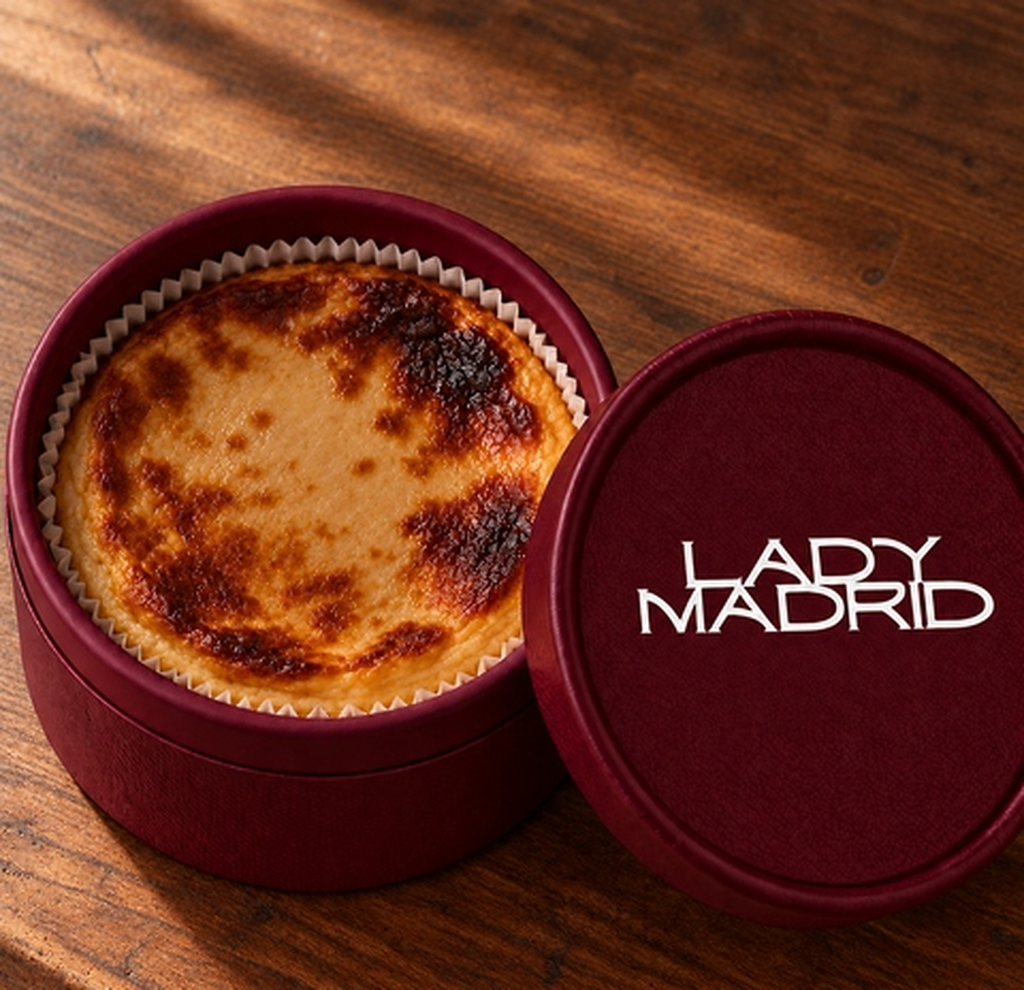
Lady Madrid was born from a very Spanish idea: bringing the tradition of «sobremesa» — lingering at the table after a meal — to the United States. Its signature product is a Basque-style cheesecake with a Madrid-inspired identity, made in San Francisco. The brand initially began selling without a physical store, relying on pop-ups and online pre-orders. Around 95% of its pop-ups have sold out, and at one of them it sold more than 200 mini cheesecakes in just two hours.
Guillermo Méndez, founder of Lady Madrid, explains how the company preserves the cheesecake’s texture until it reaches the customer, how it combines pre-orders, scheduled pick-ups and same-day delivery through Uber Eats, and where it finds the balance between speed, quality and profitability.
Ecommerce News (EcN): How did Lady Madrid come about, and what opportunity did you identify in turning an artisanal product into a digital business?
Guillermo Méndez (GM): Lady Madrid was born from a very Spanish idea: bringing the tradition of sobremesa to the United States. That moment when you stay at the table after a meal, share something delicious and let the conversation continue. Cheesecake is our way of inviting people to do just that: Basque in essence, Madrid-inspired in style and made in San Francisco.
We saw an opportunity to build a brand around a very specific product with a strong personality. The digital channel allowed us to get started without a store, test flavours and formats, get to know our customers and validate demand before taking on a larger structure. Pop-ups gave us direct contact with customers, while online pre-orders helped us turn that interest into orders.
EcN: How have American consumers responded? What do they value most?
GM: The first thing that surprises them is the texture. Many customers come with the American cheesecake as their point of reference and discover a different experience, particularly because of how creamy ours is.
The look and the story attract people, but the product is what brings them back. Convenience comes next: no matter how much you like a brand, if buying from it is complicated, some of that interest is lost.
We have also seen that our Spanish origins spark curiosity. We want that story to come through in the product, the packaging, our collaborations and the way we engage with customers.
EcN: What has been the biggest challenge in moving from making cheesecakes to delivering them directly to customers?
GM: Making sure the experience is consistent. A cheesecake can be perfect when it leaves the kitchen and arrive in worse condition because of a movement, a delay or packaging that does not protect it sufficiently.
Our texture is a fundamental part of the product, so there are many variables we have to look after: ingredients, preparation, cooling, storage and transportation. Even changing a supplier can affect the final result.
We have learned that quality includes everything that happens until the customer opens the box and takes the first spoonful.
EcN: What fulfilment and delivery model do you use?
GM: We operate from a production kitchen in San Francisco and combine advance orders, scheduled pick-ups, pop-ups and local delivery. For our pop-ups, we use Hotplate to manage pre-orders. We have also added Uber Eats to offer our Classic cheesecake in every size with same-day delivery, while stocks last.
The most important decisions have been matching availability to our actual capacity, making pick-up and delivery options clear, and developing packaging suited to each format.
As for physical stores, our plan is to have centralised production that can supply several locations while maintaining consistency.
EcN: What do American customers expect today when buying food online?
GM: From what we see, they expect to be able to choose easily and understand exactly what will happen with their order. Some people need a cheesecake for a celebration several days away, while others want a dessert for that very evening.
In the first case, certainty about the day and time is crucial. In the second, immediate availability matters most.
We have seen how important it is to make the pick-up or delivery options and time slots clearly visible. A decision that seems minor on the checkout page can cause a lot of confusion later. Convenience starts right there.
EcN: Where is the balance between speed, quality and profitability?
GM: Quality sets the limit. After that, we have to find a delivery model that is convenient and generates a positive contribution. Fast delivery adds value when you already have the product available, the journey is reasonable and the order can absorb the cost of the service. It can eat into margins when it requires too much additional preparation, long journeys or constant discounts.
A mini cheesecake and an order for several whole cheesecakes have very different economics. That is why we need to look at the result of each order after packaging, preparation, commissions, delivery and any issues. Higher revenue does not necessarily mean higher profits.
EcN: What role does made-to-order production play?
GM: Pre-orders have been an essential tool. They allow us to know part of what we are going to sell before producing, organise purchasing and workloads, and reduce uncertainty. At our pop-ups, approximately 95% have sold out, and we usually bring additional units beyond those already reserved to serve customers who discover us at the event. At Cole Valley Nights, we managed to sell more than 200 minis in two hours.
We aim for a balance: a base of confirmed demand and a controlled additional quantity. Producing everything to order could mean missing out on spontaneous purchases; producing without visibility would increase the risk of waste. Combining both approaches helps us grow with greater control.
EcN: Which channels generate the most business for Lady Madrid?
GM: So far, pop-ups and the pre-orders associated with them have been essential for validating demand and building a community. Social media drives discovery, while recommendations play a major role in bringing in new customers.
We have collaborated with venues such as SPRO, Wooden Coffee House, Kissaten Hi-fi, Blue House Coffee and Loaf. At Wooden, for example, after our pop-up they suggested selling our minis on a permanent basis.
We are also developing B2B and delivery channels. I would not yet rank them by revenue without reviewing the figures: each channel serves a different purpose, from introducing people to the brand to generating repeat purchases.
EcN: How do you use social media to turn attention into orders?
GM: We try to make sure our content conveys what makes the product special: the cut, the creaminess, a spoon going into a mini cheesecake. We are working on ASMR content because sound and detail can bring us much closer to that experience.
We also show people the places that are part of Lady Madrid. Collaborations make sense when we share a similar sensibility and approach to doing things.
After that, the purchase process needs to be very clear: what we sell, where, when and how to book. Beautiful content needs a simple call to action to turn attention into orders.
EcN: Which metrics are essential?
GM: I would look at five groups. Repeat purchases: how many customers come back and how often. Average order value: how it changes by format, occasion and channel. Contribution margin per order: what remains after the variable costs of fulfilling it. Customer acquisition: how much it costs to acquire a customer and what they buy afterwards. And operations: waste, punctuality, issues and returns.
In our case, it is also useful to measure how much is pre-ordered before each pop-up and how much is sold on the day. This helps us adjust production. It is important to distinguish the product margin from the final order margin, especially when a delivery platform is involved.
EcN: What does Spain need to develop sustainable ecommerce?
GM: From my experience, I would prioritise better integration between orders, production capacity, inventory and delivery. We also need logistics solutions that work for small businesses and allow demand to be consolidated efficiently.
There are already tools that make it possible to schedule orders and configure pick-ups and deliveries. The challenge for a brand is to integrate them properly into its operations.
I see a lot of value in reliable delivery time slots, clearly defined delivery areas and transparent costs. Promotions can encourage a first purchase, but repeat business needs to be built on a service customers value and an operating model that works financially.
EcN: What should a Spanish brand start doing today to avoid falling behind?
GM: I would start by getting to know customers better, making direct purchases easier and understanding how much each order actually earns. These are three foundations that apply to any technology that comes along later.
At Lady Madrid, the digital channel has allowed us to test the concept and build a community before opening stores. We are now closing a $625,000 funding round for our first two locations, with the ambition of growing from the Bay Area and eventually expanding nationwide.
My advice would be: build a brand that customers want to come back to, and an operation that makes it easy for them to do so. Speed will only be valuable when it helps deliver on that promise.